


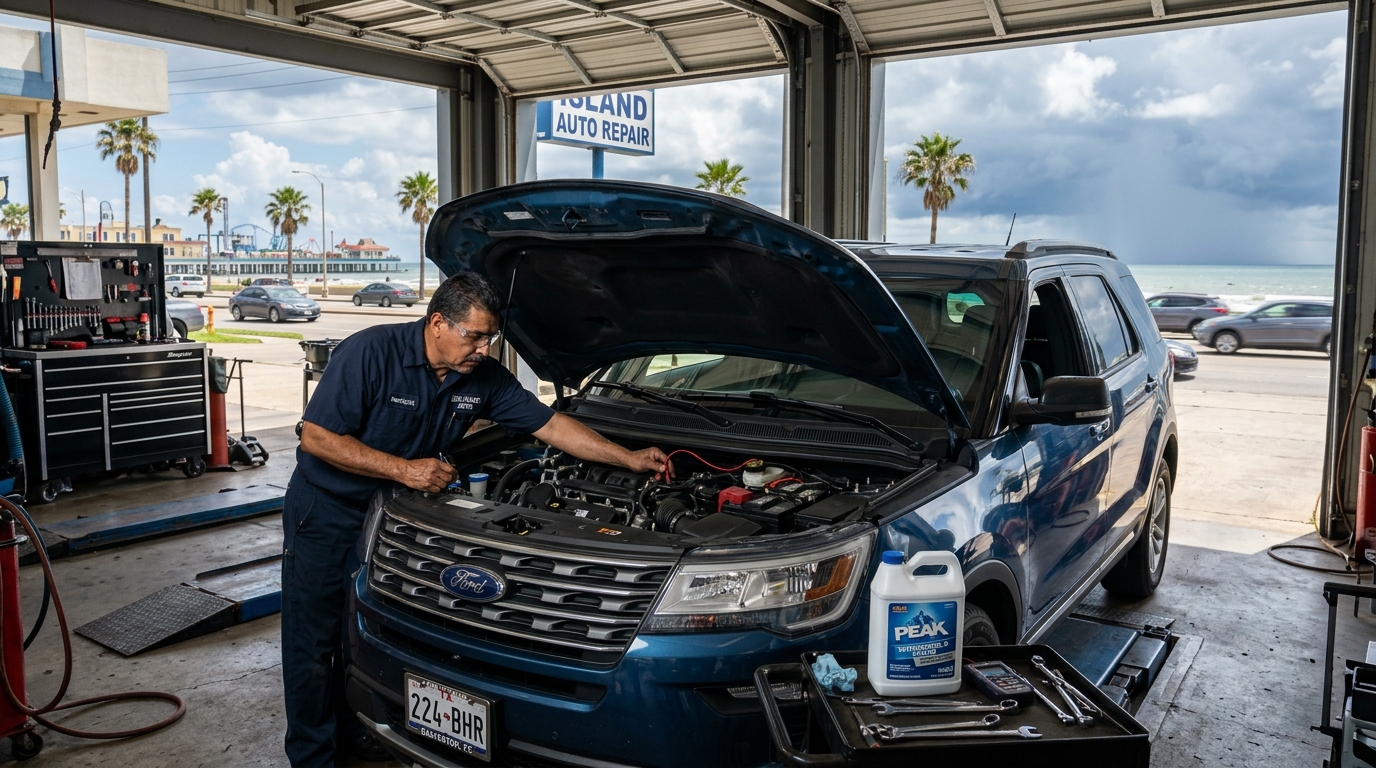
Preparing Your Vehicle for Sudden Changes in Conditions
Essential Climate Readiness for Galveston Drivers
Galveston Island’s unique coastal environment subjects vehicles to extreme heat, intense humidity, sudden tropical downpours, and corrosive Gulf salt air. Implementing timely preventive maintenance for your cooling system, air conditioning, tyres, brakes, and electrical components ensures unmatched reliability and driving safety through every sudden forecast swing.
There are complications to driving in Galveston. One day you can get brilliant sunshine and high temps; the next it can be pouring rain, heavy winds, and a lot of humidity. These climates are the normal on the island for the average driver. But weather can affect much more than driving enjoyment. Heat can put a strain on air conditioning and a cooling system, and heavy rain can lead to visibility, brake, and tire issues. In a coastal area, regular vehicle checks are a must. With good preparation, the odds can be tipped firmly in the direction of being more reliable all year long. If you are a driver in Galveston, this is something that you want to think about.
1. Prepare Your Car for Galveston Heat and Humidity
If you've ever had the misfortune to experience the Galveston heat and humidity, you know how miserable it can be (especially during the summer). Galveston has a humid subtropical climate of high humidity, increased precipitation, and mild weather. A car's cooling system must operate under these conditions. The cooling system regulates the engine temperature and keeps it from overheating. These include the radiator, water pump, thermostat, cooling fan, and hoses. If any of these components do not function properly, then the engine may have difficulty maintaining a normal operating temperature.
Warning Signs Drivers Should Watch For
When the temperature rises and traffic slows along Seawall Boulevard or Broadway, your vehicle's cooling components work overtime. Always stay alert to these critical warning indicators:
- Temperature Gauge Reading Hotter Than It Should: A needle creeping above the midpoint is often the earliest signal of coolant depletion or failing circulation.
- Coolant Leaking Underneath The Vehicle: Bright green, pink, or orange puddles beneath the engine bay indicate compromised hoses, radiator seams, or water pump gaskets.
- Steam Coming From Under The Hood: Escaping steam means coolant has reached boiling point and requires immediate shutdown to prevent head gasket failure.
- An Unusual Smell Coming From The Engine Area: A distinct sweet, syrupy odor often signifies leaking hot antifreeze burning against warm engine parts.
- Repeated Overheating During Normal Driving: Frequent thermal spikes indicate chronic issues such as a stuck thermostat or a failed electric cooling fan.
Air Conditioning System Inspection
Have your air conditioning system inspected as well. If the system is not cooling the cabin well or takes too long to cool it or is making strange noises, it is time to take a look. Investigating these issues early can prevent a small problem—such as low refrigerant or a slipping compressor clutch—from turning into a large, expensive repair.
2. Do Not Underestimate the Impact of Heavy Rain
Rain can make the road condition change quickly. Standing puddles of water can hide how much the area you're crossing may have flooded, and roads that are otherwise a walk in the park can be a slippery nightmare. Make sure your tyres are well maintained and inflated correctly before you drive in wet conditions. Worn tyre tread will not grip when wet and is far more likely to send you out of control.
Sensible Driving Habits on Wet Roads
Sudden Gulf coast cloudbursts can drop inches of rain in minutes, transforming local thoroughfares into low-traction hazards. Adopting a few proactive driving habits will dramatically improve your safety:
- Reduce Your Speed On Wet Roads: Lower speeds significantly diminish the risk of hydroplaning across standing surface water.
- Create More Room Between Your Vehicle And The One In Front: Wet asphalt significantly extends your required stopping distance; allow at least 4 to 5 seconds of buffer space.
- Do Not Brake Or Swerve Abruptly: Sudden inputs can break tire adhesion instantly, leading to skids or complete loss of directional steering control.
- Avoid Driving Through Flood Water Of Unknown Depth Or Condition: What appears to be a minor puddle can mask deep washed-out pavement or submerged obstacles that hydro-lock engines.
- In Flooding, Visibility May Be Poor; Switch On Your Headlights: Using low-beam headlights cuts through thick sea spray and downpours, ensuring fellow drivers see you in advance.
3. Pay Attention to the Effects of Coastal Conditions
Cars in Galveston often suffer damage from their coastal environment as they sit around near the Gulf of Mexico. Along with such a coastal environment comes moisture and salt in the air, which can result in corroded exposed metal surfaces and vehicle components. Since not all vehicles will experience significant rust problems, it is a reason to inspect them on a regular basis.
Rust Prevention and Undercarriage Protection
Regularly inspect exposed metal and look at the undercarriage, suspension parts, and brake lines. Check for rust, damaged protective coatings, or any unusual vehicle handling. Pay special attention to cleaning the underside of the car and removing accumulated salt and road grime.
Paint Preservation and Scratch Repair
Similarly, fix paint chips and scratches promptly before moisture and coastal salinity allow the underlying bare sheet metal to begin oxidizing. Routine exterior washing and a protective layer of ceramic wax create a resilient barrier against humid sea air.
4. Check Your Tyres, Battery and Electrical Systems
Weather conditions can strain certain points on a vehicle by day. You want to check your batteries, electrical systems, and tyres regularly to avoid unexpected breakdowns when driving across the island or crossing the causeway.
Tyre Tread Depth and Inflation Pressure
Begin with your tyres. Inspect the tread condition, pressure, and any signs of uneven wear regularly. Proper inflation compensates for ambient temperature swings, and healthy tread depth ensures effective water evacuation. Good tires will mean better braking, handling, and general performance and road safety. If you notice irregular shoulder wear, consider a professional tire rotation and alignment check.
Battery Testing in High Heat
Next, check the battery. Heat can make the battery go bad, and it just might be older and less reliable. High summer temperatures accelerate electrolyte evaporation and internal plate corrosion. If your engine is turning over slowly, your headlights are dim, or you're begging the car to start, it's time to take the test drive and have your battery load-tested at a trusted local battery service center.
Essential Electrical and Lighting Systems
Don't forget the electrical parts. Headlights, brake lights, turn indicators, wipers, and other essential systems should all work properly before you head out. Replace dried or chattering windshield wiper blades so you always have a clear windshield when an afternoon thunderstorm sweeps over Galveston.
Keep Your Vehicle Reliable Year-Round with Kayser’s Automotive
Navigating Galveston's rapid weather transitions requires a proactive mindset and timely mechanical maintenance. Whether you need a comprehensive cooling system flush, AC performance diagnostic, brake inspection, or battery load test, our experienced team at Kayser’s Automotive is here to ensure your vehicle remains safe and dependable.
As a family-owned shop located right on Broadway Street, we welcome walk-in customers and deliver transparent, high-standard service tailored to our island's demanding coastal climate. Explore our complete automotive repair services or contact our team today to keep your car prepared for whatever conditions come next.
Semantic Keynotes & Named Entity Recognition (NER) Tags
Descriptive Semantic Keynotes
- Climate-Specific Vehicle Preparedness: Addresses the direct mechanical impacts of Galveston Island’s humid subtropical climate, fluctuating weather patterns, sudden cloudbursts, and coastal salinity on passenger vehicles.
- Preventive Safety and Reliability: Provides clear diagnostic checklists for engine cooling systems, air conditioning, tyre condition, and electrical battery vitality to avert roadside overheating and breakdowns.
- Coastal Corrosion Defense: Highlights actionable steps for protecting vehicle undercarriages, suspension assemblies, brake lines, and exterior paintwork against persistent salt-air oxidation.
- Localized Driver Safety Guidance: Delivers actionable wet-road driving techniques tailored for Galveston drivers navigating flooded streets, standing puddles, and reduced coastal visibility.
Named Entity Recognition (NER) Tags
- ORGANIZATION & BRANDS: Kayser’s Automotive Services, Kayser’s Automotive
- PERSON: Mr. Sameer Kayser
- PRODUCTS, SERVICES & SOLUTIONS: cooling system repair, radiator inspection, water pump replacement, air conditioning service, tyre tread inspection, battery load testing, suspension check, rust prevention, brake line inspection
- STRATEGIC & FUNCTIONAL CONCEPTS: overheating prevention, hydroplaning mitigation, coastal corrosion, battery electrolyte degradation, wet road stopping distance, walk-in automotive repair
- INFRASTRUCTURE & SECURITY ENTITIES: service bays, Broadway shop, vehicle undercarriage, cooling fan, radiator, thermostat
- CONTACT, CHANNELS & GEOGRAPHIC DATA: Galveston, Texas; Gulf of Mexico; 5120 Broadway St; (409) 765-6712